
Why professional residential Christmas lighting is worth paying for
The honest case for having someone else install your holiday lighting: safety, fit, materials, and who deals with it when a strand fails in December.
· 4 min read
There is a version of this article that is mostly about joy and magic. This is not that version, because the real reasons are more practical and they hold up better.
The ladder is the actual argument
Every December, emergency rooms in this country see thousands of falls and electrical injuries from people decorating their own houses. Icy gutters, a ladder on a slope, a reach that is eight inches too far, an outdoor circuit doing something it was not meant to do.
It is a genuinely hazardous job done once a year by people who are out of practice at it, usually in the cold, often in a hurry. That is the whole risk profile in one sentence. Our crews do it daily, in season, trained and insured.
A retail kit cannot fit your house
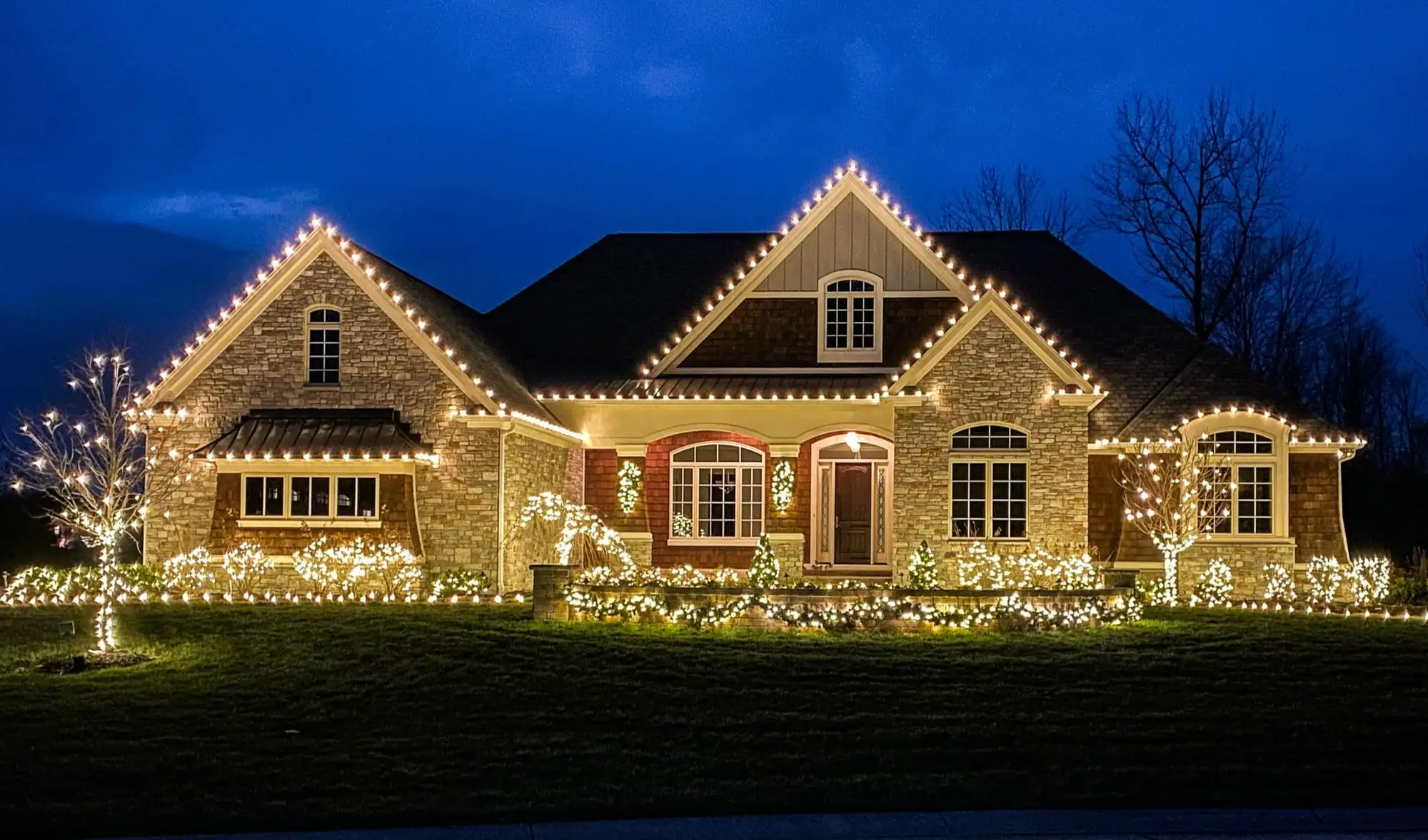
This is the difference you can see from the street, and once you have noticed it you cannot stop noticing it.
Retail strands come in fixed lengths. Your roofline does not. So a run either stops short of the corner or has to double back with a loop of surplus, and the lamp spacing is whatever the packet decided rather than whatever suits the run. On a simple ranch you can get away with it. On anything with gables, dormers, bays or a wrapped porch, it reads as approximate.
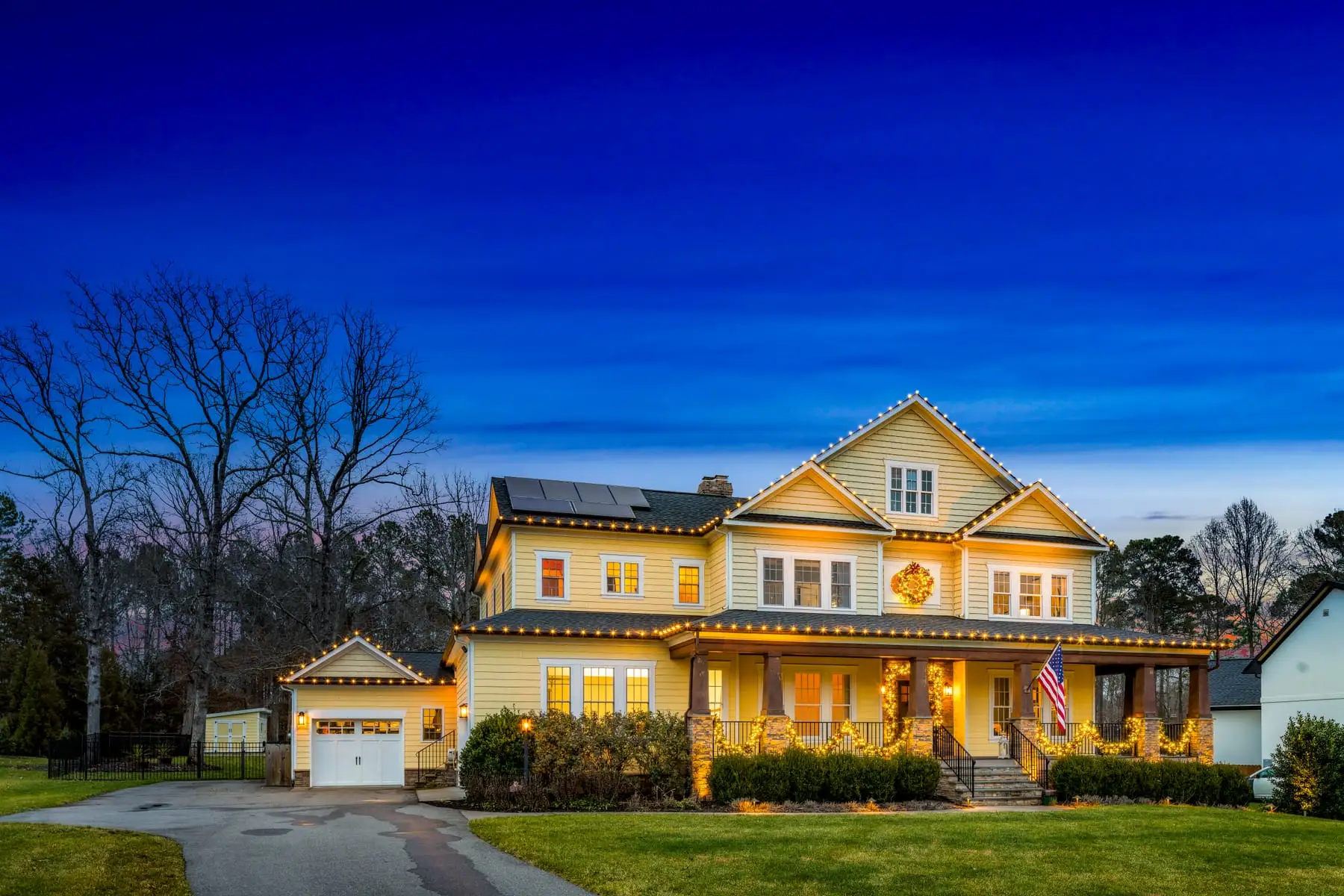
Our strands are cut and clipped to the specific run. Straight lines, even spacing, and no gaps where something came up short.
The materials are specified for more than one season
Seasonal retail stock is priced to be bought again. Commercial-grade LED strands, clips and timers are specified to spend several winters outdoors in Ohio and to be taken down and re-hung without degrading.
That is also why the lights stay ours and get stored between seasons rather than being sold to you. It is a display you are renting the use of, maintained by the people who own it, which aligns the incentives correctly: we are the ones who have to deal with it if it fails.
Design is a real part of it
Most houses have two or three lines worth picking out and a lot of surface that is better left dark. Knowing which is which takes looking at the building rather than at a catalog.
A good design also considers what the house looks like from where people actually see it: from the road, at an angle, at thirty miles an hour. That is a different composition from the one you would design standing on the front lawn.
Then it disappears
In January we take it all down and store it, labeled, so next season begins with a phone call. No bins in the garage, no tangle, no January afternoon on the roof.
That is the honest summary: it is safer, it fits, it is built to last, and it is somebody else’s job from start to finish.
See what it looks like on real houses in the gallery, or request a quote.